Quiet Planet

The COVID-19 outbreak and the resulting social distancing recommendations and related restrictions have led to numerous short-term changes in economic and social activity around the world, all of which may have impacts on our environment. Your challenge is to use space-based data to document the local to global environmental changes caused by COVID-19 and the associated societal responses.

Thinking of Temporary reduction in global CO2 emissions

Summary

Due to the influence of COVID-19, human activities and economic activities have changed significantly.How could it affect the global CO2 emissions?I will discuss developing map app to take a bird's eye view of what is happening in the world using satellite data and geospatial information.

How I Addressed This Challenge

This is an attempt to understand what is happening in the world by taking up the findings of the latest paper on CO2 emission reduction by COVID-19.

How I Developed This Project

Incorporate the latest scientific knowledge using earth observation satellite data as a new function into the GPS logging enabled map application.

Project Demo

Slide.1

Background

As a challenge for this time, I have recently been personally interested in global warming issues and earth observation data, and I am going to do various research in the future, so I chose "Quiet Planet".

My project title is "Thinking of Temporary reduction in global CO2 emissions", I will explain its background. The global expansion of the COVID-19 pandemic and its impacts have transformed the world's unprecedented economic and social conditions, we are facing and living in that situation now. 

It's difficult to get a bird's eye view of what's happening right now, but over the past few months I experienced, my challenge has begun with an awareness of what the global CO2 emissions are like.


Slide.2

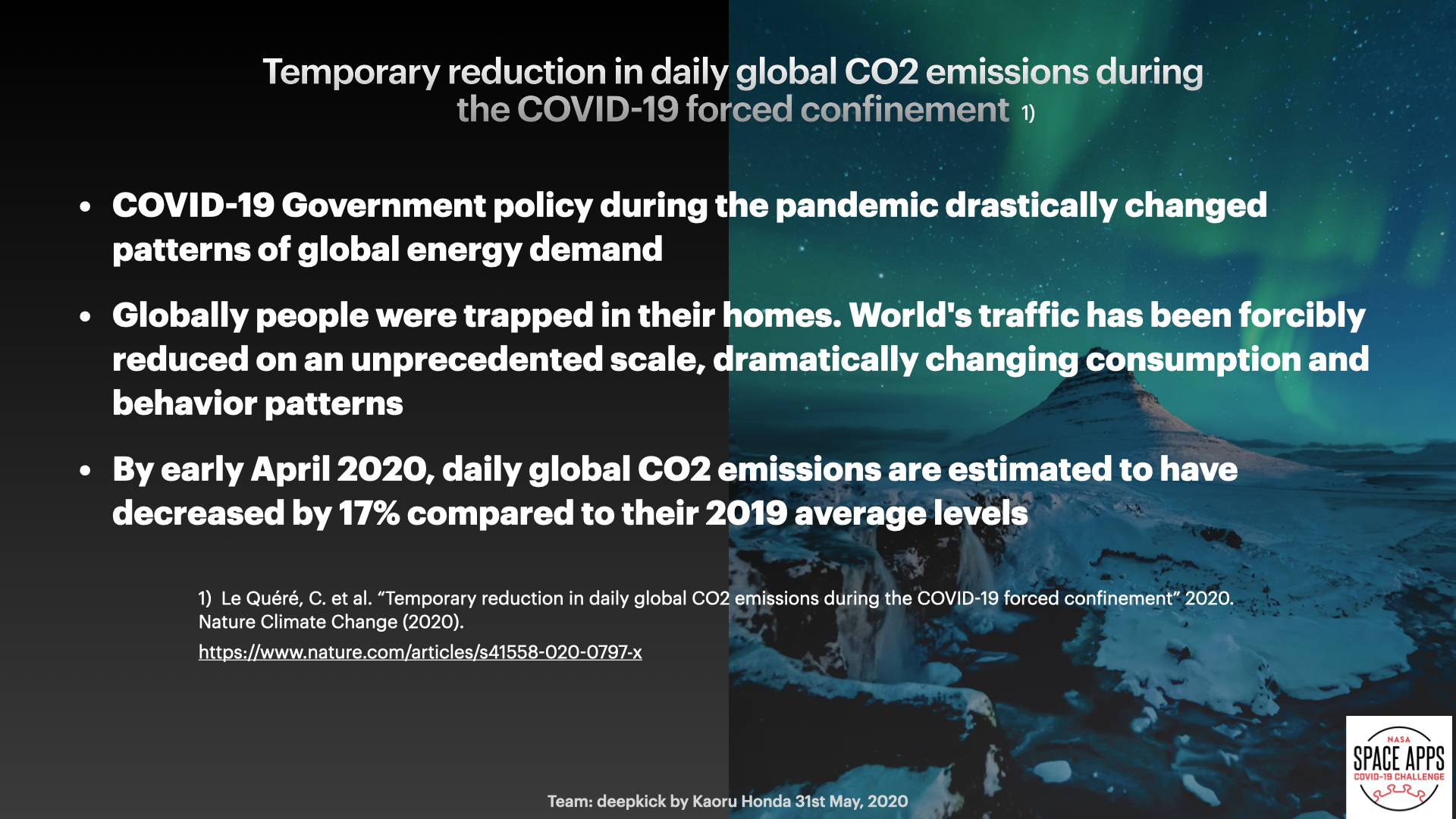
Temporary reduction in daily global CO2 emissions during the COVID-19 forced confinement

  • COVID-19 Government policy during the pandemic drastically changed patterns of global energy demand
  • Globally people were trapped in their homes. World's traffic has been forcibly reduced on an unprecedented scale, dramatically changing consumption and behavior patterns
  • By early April 2020, daily global CO2 emissions are estimated to have decreased by 17% compared to their 2019 average levels


Slide.3

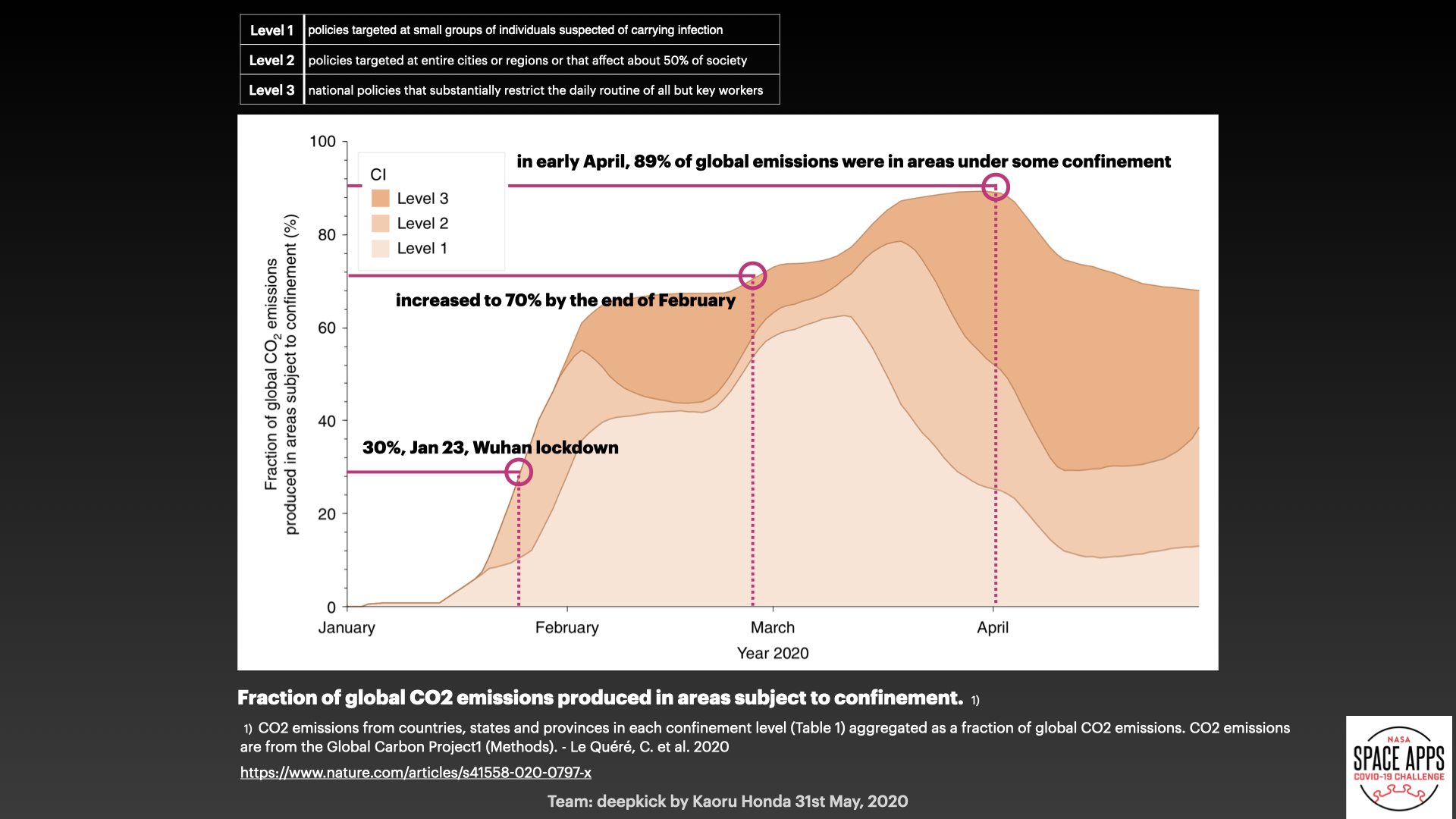
Fraction of global CO2 emissions produced in areas subject to confinement

  • 30%, Jan 23, Wuhan lockdown
  • increased to 70% by the end of February
  • in early April, 89% of global emissions were in areas under some confinement


Slide.4

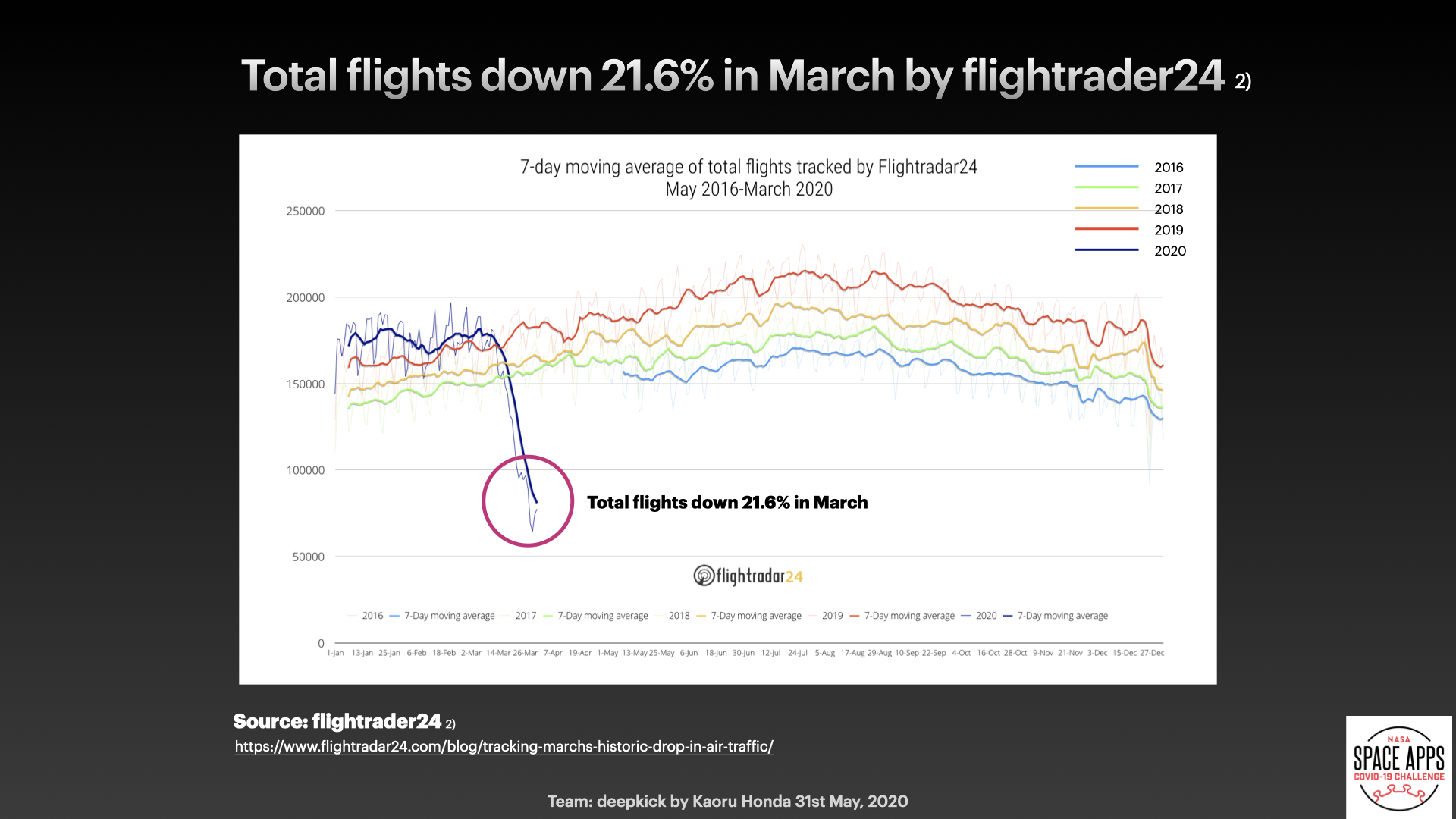
Total flights down 21.6% in March by flightrader24


Slide.5

Discussion and Future Works

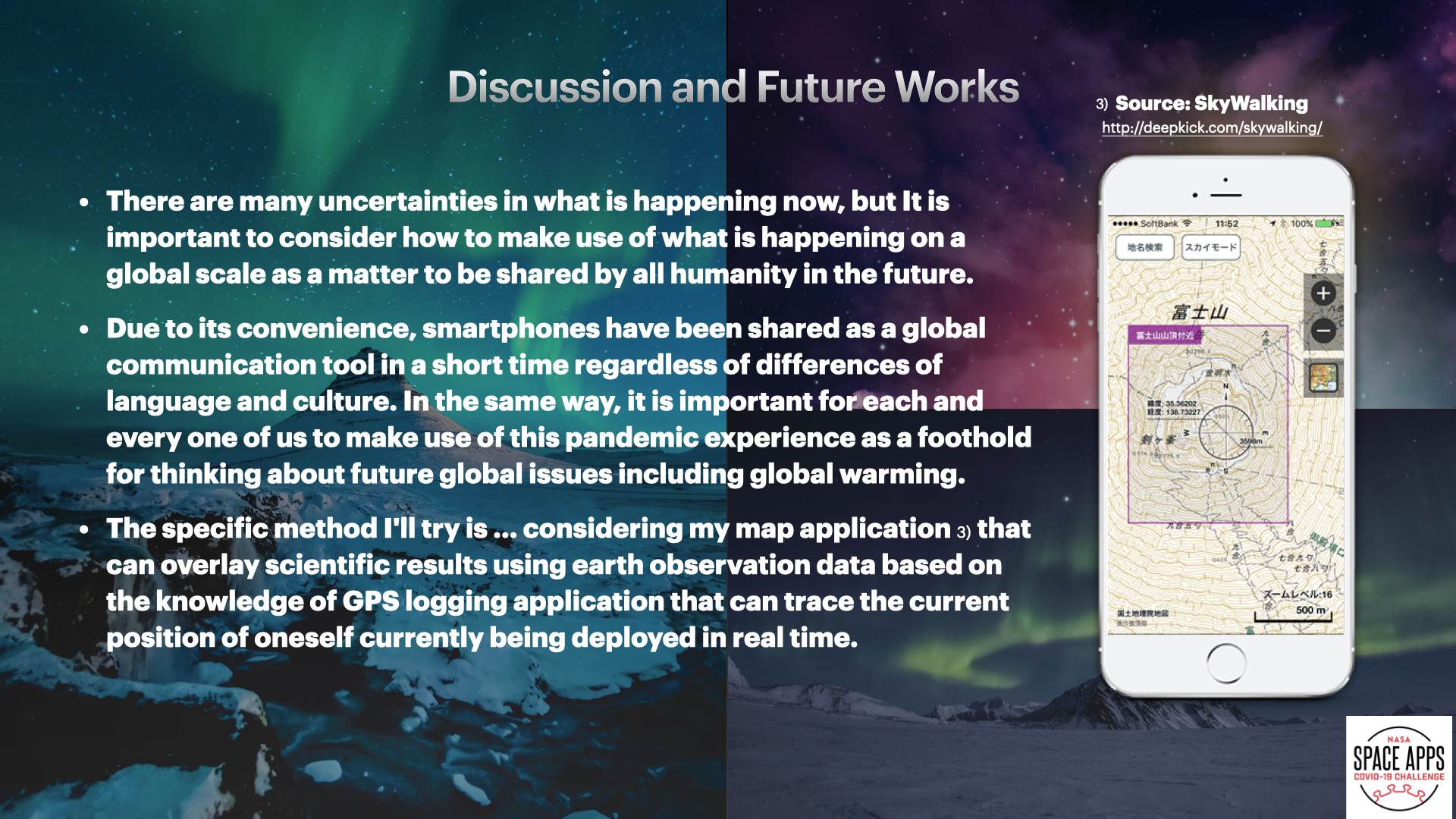
  • There are many uncertainties in what is happening now, but It is important to consider how to make use of what is happening on a global scale as a matter to be shared by all humanity in the future.
  • Due to its convenience, smartphones have been shared as a global communication tool in a short time regardless of differences of language and culture. In the same way, it is important for each and every one of us to make use of this pandemic experience as a foothold for thinking about future global issues including global warming.
  • The specific method I'll try is ... considering my map application * that can overlay scientific results using earth observation data based on the knowledge of GPS logging application that can trace the current position of oneself currently being deployed in real time. 

I will show effective methods to take a bird's eye view of what is happening in the world using satellite data and geospatial information by developing my map app.

Video

* SkyWalking - Demonstration MOVIE

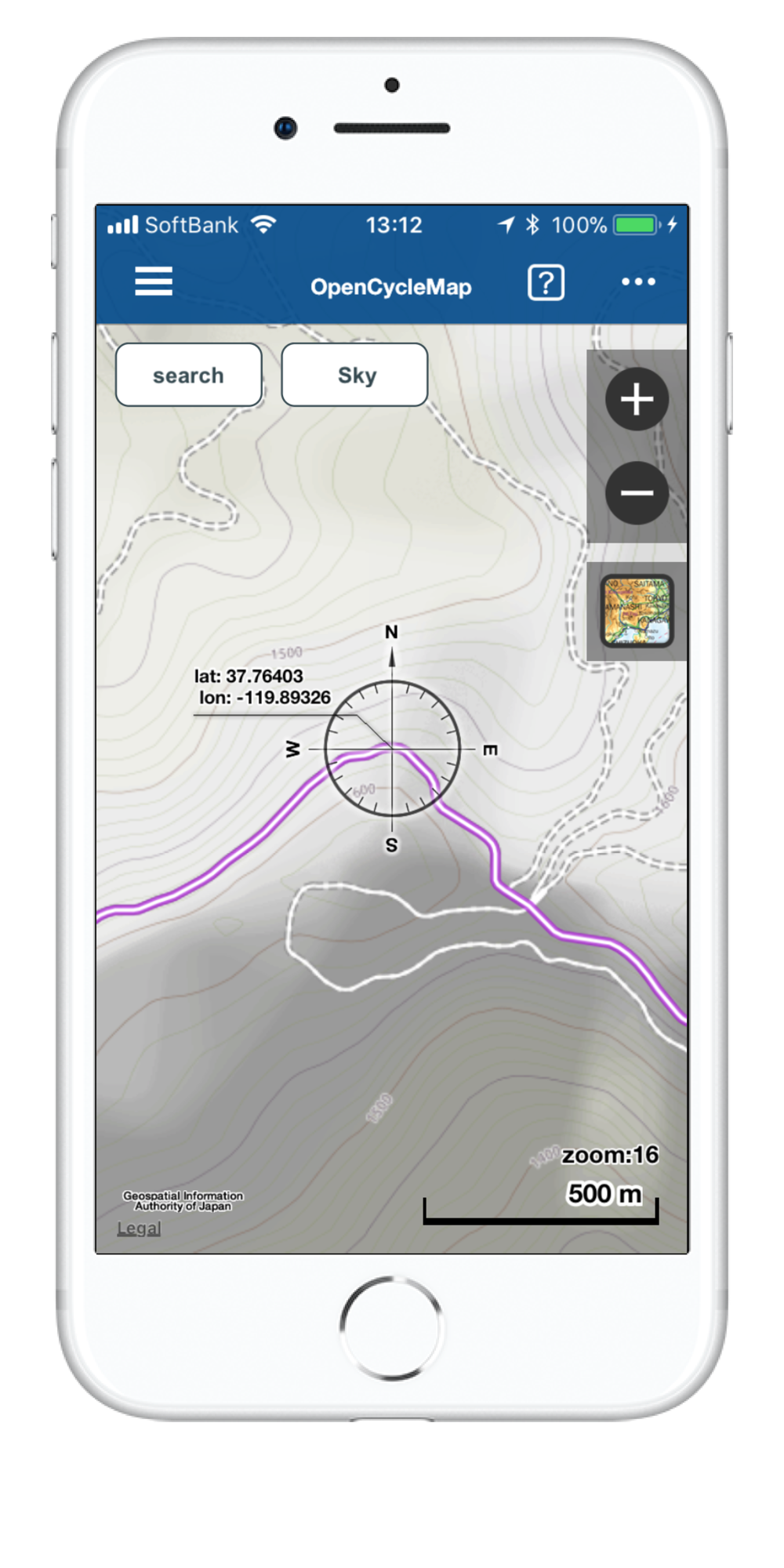
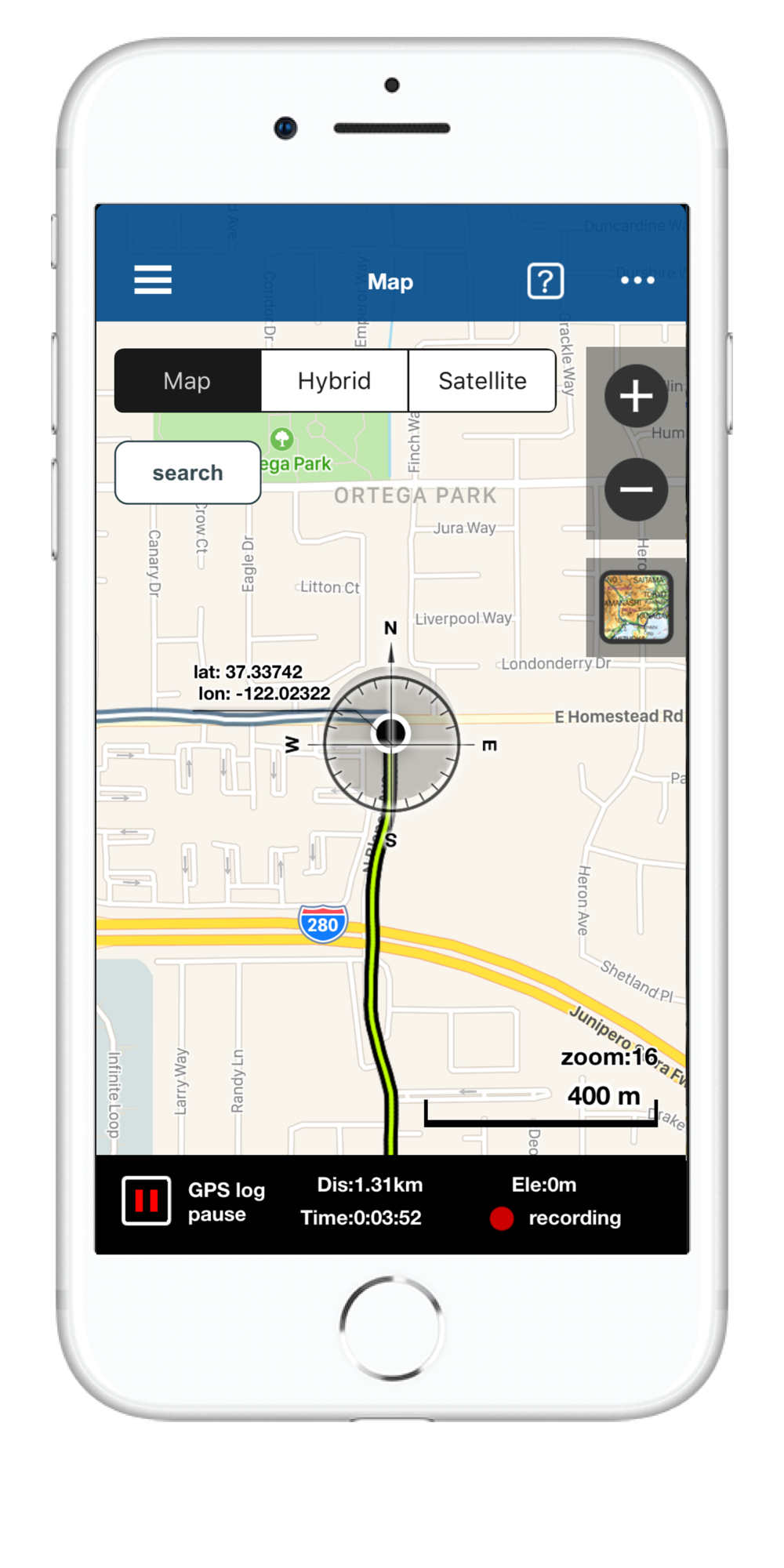
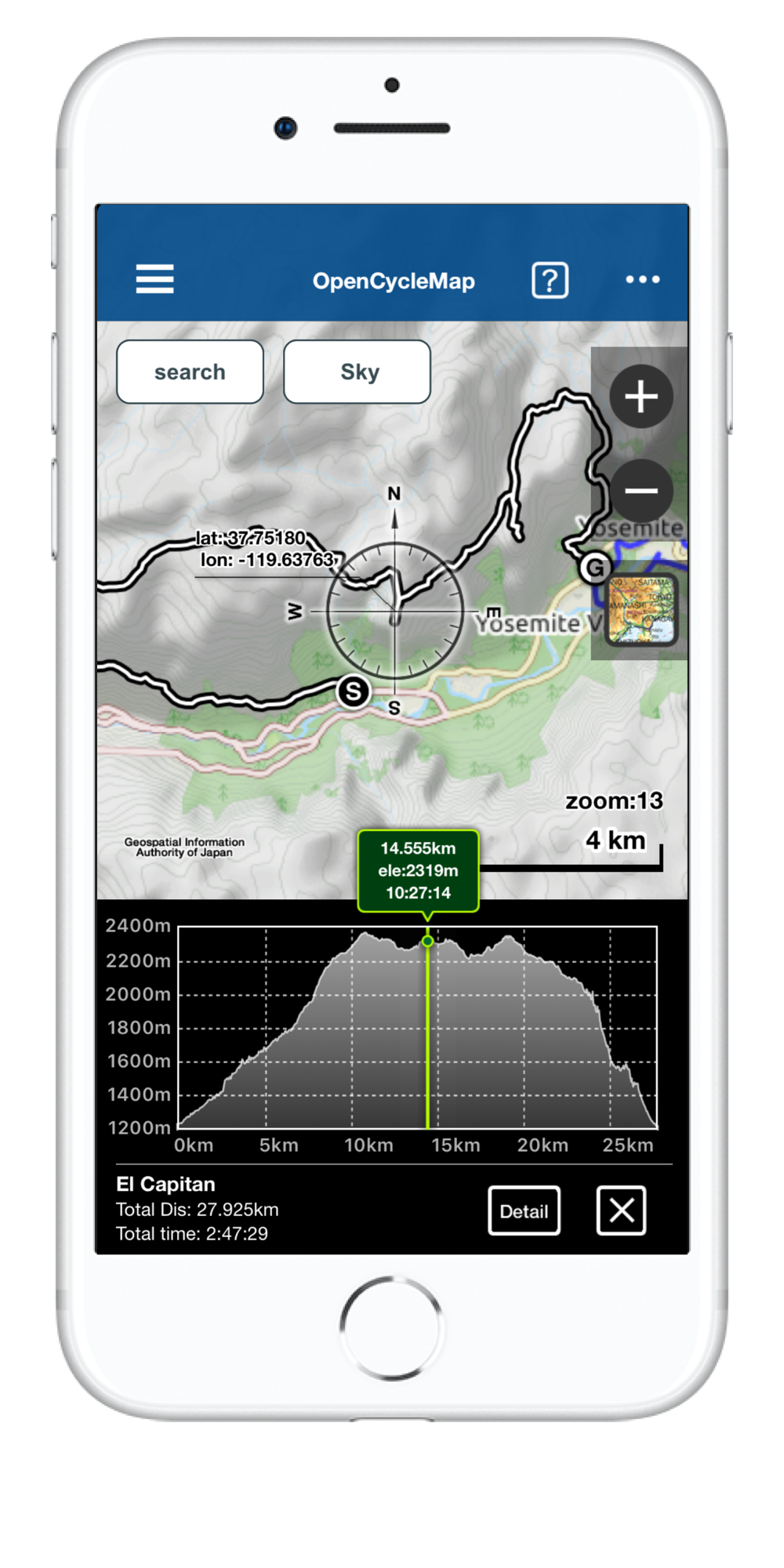
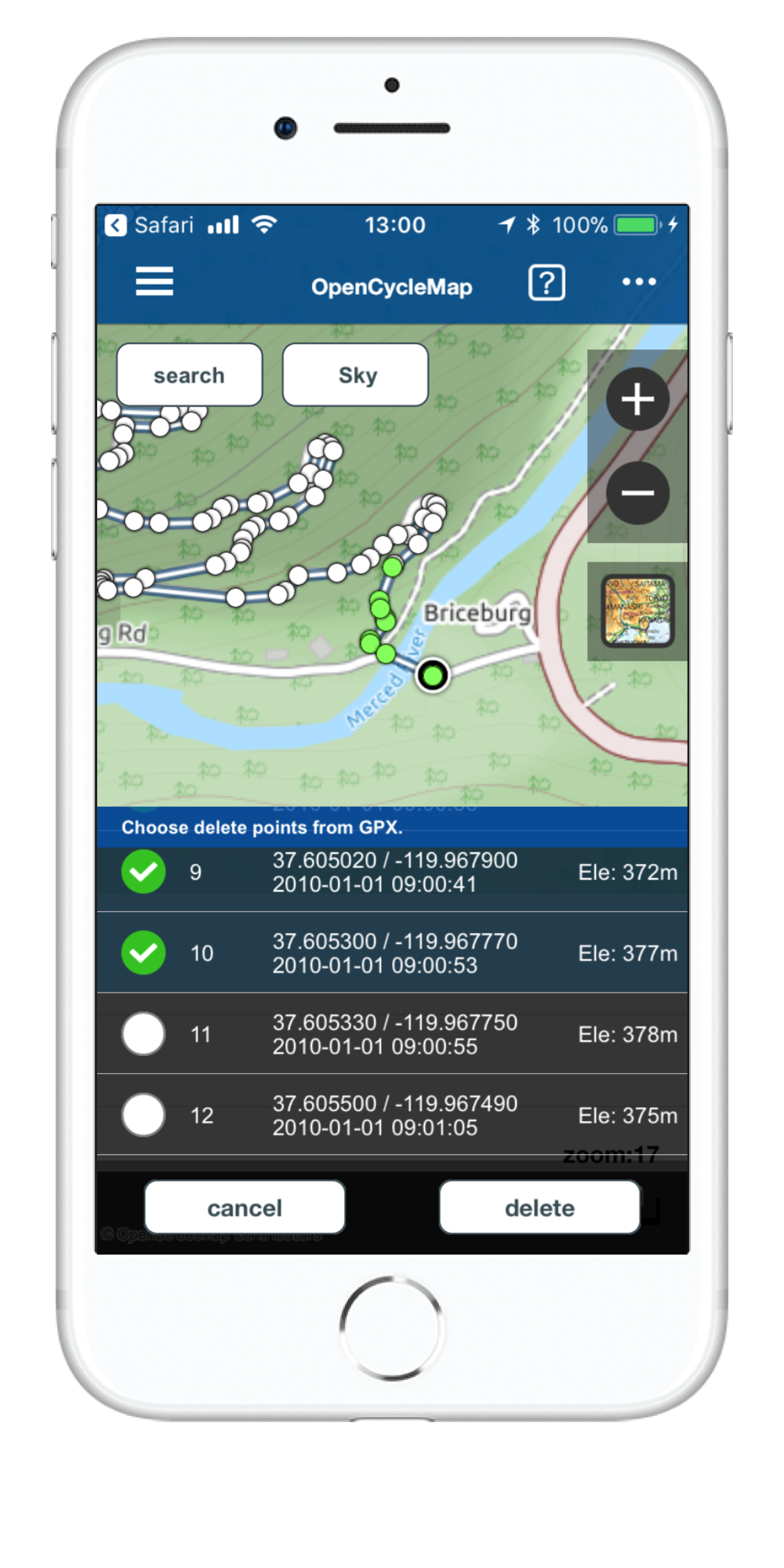
ScreenShots

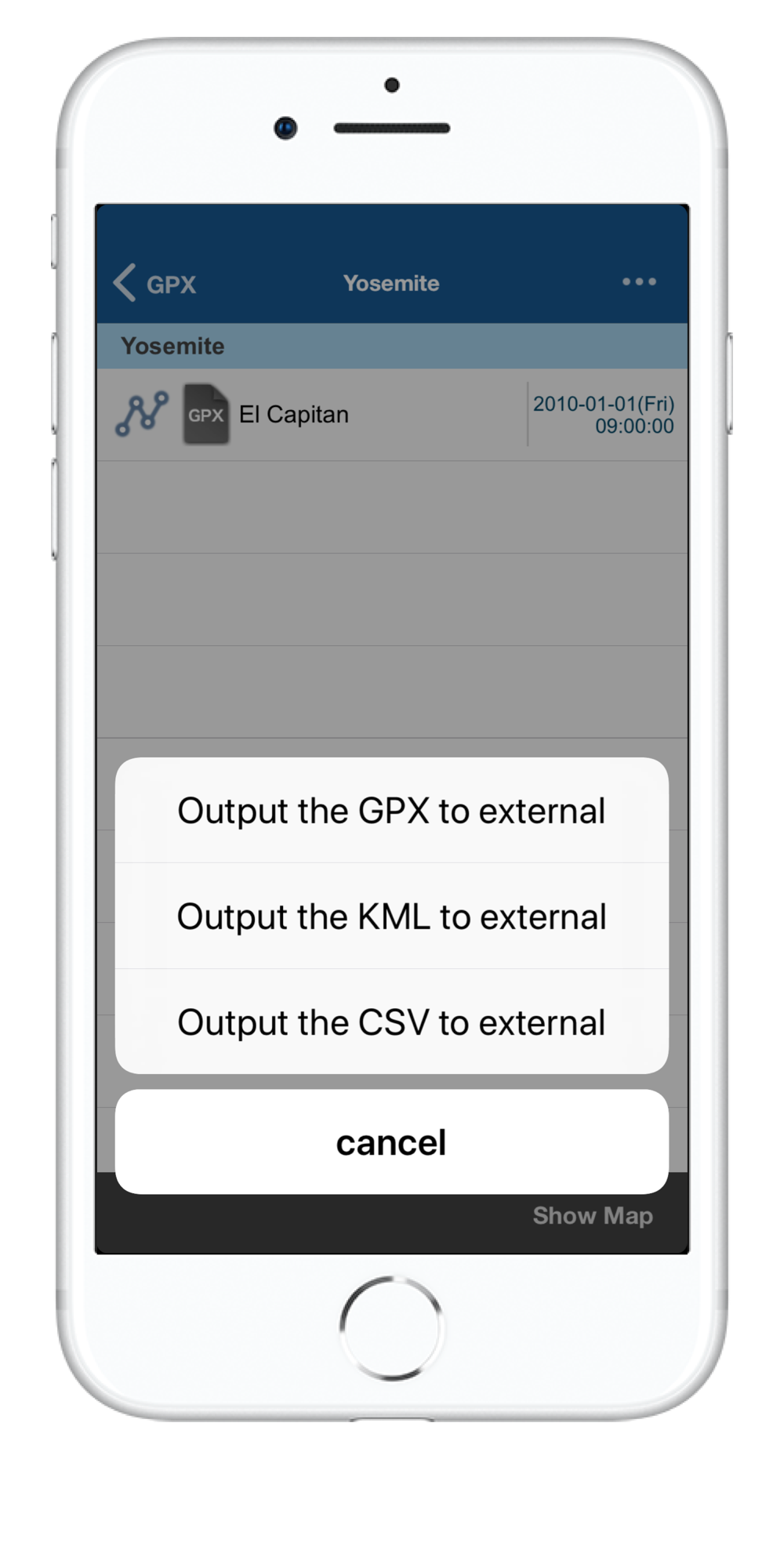
ScreenShots.1

ScreenShots.2

ScreenShots.3

ScreenShots.4

ScreenShots.5

Data & Resources

1) Le Quéré, C. et al. “Temporary reduction in daily global CO2 emissions during the COVID-19 forced confinement” 2020. Nature Climate Change (2020). https://www.nature.com/articles/s41558-020-0797-x


2) Oxford COVID-19 Government Response Tracker, BBC Research https://www.bbc.com/news/world-52103747


3) flightrader24 

https://www.flightradar24.com/blog/tracking-marchs-historic-drop-in-air-traffic/


4) SkyWalking

http://deepkick.com/skywalking/


5) Global Nitrogen Dioxide Monitoring Home Page

https://so2.gsfc.nasa.gov/no2/no2_index.html


6) Geospatial Information Authority of Japan - Chiriin Tiles
https://maps.gsi.go.jp/development/ichiran.html

Tags
#global warming #climate change #covid-19 #CO2 emission #map
Global Judging
This project was submitted for consideration during the Space Apps Global Judging process.